¶ 9.7. Corporate Communication
¶ Communication strategies
Communication is important for coordinating efforts in activities of an organisation. It facilitates planning, decision-making, and action taking, as it provides effective leadership and boosts staff morale and motivation. In addition, DFOs have a legal responsibility of informing their LG Councils on all matters of forestry in the district, including the forest estate in PAs (e.g. information on licenses issued for tree growing in FRs, movement of forest produce, etc.).
Therefore DFOs need information from NFA, UWA and private forest owners. On the other hand, MWE/ FSSD needs to compile national reports, and for this, they need information from the other FMIs in order to prepare reports in time. Therefore, it is important that FMIs develop communication strategies to guide all their staff and clients.
Instruction 476: The communication strategy of an FMI shall have the following minimum ingredients:
(i) Aligned with the mission, vision, goals and objectives of the institution.
(ii) Communication goals, target audience, communication plan, message, communication channels, and resources.
(iii) The audience should be mapped through stakeholder analysis to identify influence/power and interests of each category of stakeholders (Figure xxx). The stakeholder analysis should be used to tailor messages for the various stakeholders
(iv) Adherence to the communication protocols of the institution as detailed in the institution guidelines
(v) Commitment to, and means of sharing of information between the Government FMIs
Instruction 477: A public officer shall not, except in the proper course of his or her duties and with specific authority of the Minister or Responsible Officer, make communication to the press on questions of Government policy or business. A breach of this instruction shall make a public officer liable to disciplinary proceedings.
Instruction 478: Forms of communication may include:
• Letters;
• Fax;
• Email;
• Internet;
• Telex;
• Telephone;
• Teleconferencing; and
• Video conferencing
¶ Public Relations
The point of public relations is to persuade the public to think favourably about the institution and what it offers. Commonly used tools of public relations include news releases, press conferences, speaking engagements, and community service programs. Some of the main goals of public relations are to create, maintain, and protect the organization's reputation, enhance its prestige, and present a favourable image. Specific areas of public relations, include, but are not limited to product relations, employee relations, financial relations, community relations, crisis communications, government and political relations, public relations in the public interest, and consumer education.
Instruction 479: Public relations tools should include, but may not be limited to the following:
• Write and distribute press releases
• Speech writing
• Write pitches about the institution and send them directly to journalists
• Create and execute special events designed for public outreach and media relations
• Conduct market research on the institution or it’s messaging
• Expansion of business contacts via personal networking or attendance and sponsoring at events
• Writing and blogging for the web (internal or external sites)
• Crisis public relations strategies
• Social media promotions and responses to negative opinions online
Instruction 480: The following steps for conducting a public relations campaign should be adapted to the needs of each institution, indicating what staff at various organisational levels are allowed to do or not to do.
• Public relations should be part of the institution’s communication strategy
• Public relations should be conducted based on knowledge and understanding of all the factors that influence public attitudes toward the organization and their perceptions of the organization.
• The organization should establish an overall policy with respect to the campaign, which spells out the goals and desired outcomes, as well as the constraints under which the campaign will operate.
• The institution should outline its strategies and tactics and develop specific programs to achieve the desired objectives.
• The institution should communicate with the targeted public through the appropriate public relations techniques, such as press conferences or special events, to reach the intended audience.
• The officers should seek feedback from the public/audience and respond appropriately.
• All communication with the press/ media whether verbal or written shall be done by the Responsible Officer or by the Public Relations Manager/ Spokesperson.
¶ Access to Information
Information is a strategic tool that confers intrinsic and extrinsic power to act responsibly, and its access and use are regulated. The Access to Information Act 2005 reiterates the Constitutional provision that says, “Every citizen has a right of access to information and records in the possession of the State or any public body, except where the release of the information is likely to prejudice the security or sovereignty of the State or interfere with the right to the privacy of any other person”[1].
Instruction 481: In line with the Access to information Act, the following should be observed:
• A public officer should provide to any member of the public who requests for the information in possession of the public officer within the provision of the Access to Information Act 2005 and the Access to Information Regulations 2011.
• The request for access to a record shall be in Form 1 set out in Schedule 2 (Access to Information Regulations 2011).
• The request shall contain a sufficient description of the record to which a person is requesting access.
• Where practicable, the requester may send the request for a record by email or in other electronic form.
• The requester shall pay a non-refundable access fee set out in Schedule 3 when requesting for a record from a public body.
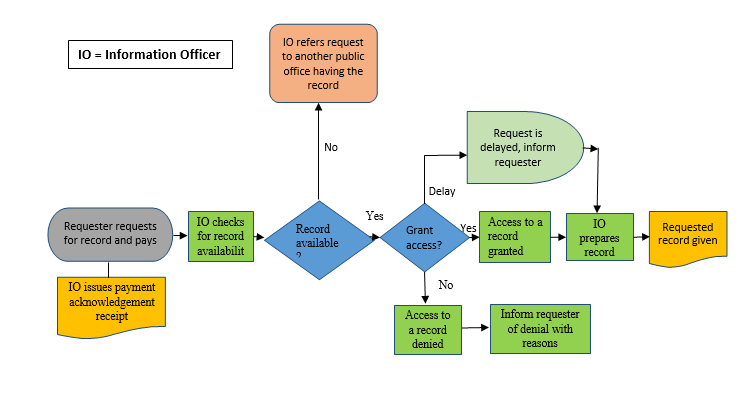
Figure 18 illustrates how the information is requested and accessed.
Figure 18: Flow chart showing process for information access
Republic of Uganda, 2005. Access to Information Act, 2005 ↩︎